
How to Verify Health & Medical Quality with a COA?
I meet buyers every week who ask about COAs, and most of them believe a COA proves quality. It does not. A COA helps you screen suppliers before you waste money on bad products[^1]. I see fake COAs all the time, and I will show you how to verify them.
A Certificate of Analysis (COA) for health and medical products is a supplier screening tool, not a quality guarantee. Verification requires checking issuer credentials, matching batch numbers to production records, and confirming third-party lab contact details. A strong COA reflects process discipline; a weak one exposes supplier risk. Always verify before negotiating price, and never skip independent testing.

Most buyers treat all COAs the same way. They download the PDF, see some test numbers, and move to price negotiation. This mistake costs them thousands of dollars when the shipment fails customs inspection or customer complaints pile up. I will walk you through what we teach buyers to check when they evaluate us and our competitors.
Why do health and medical product COAs differ from other industries?
Buyers coming from electronics or machinery procurement often assume COA formats work the same across industries. They do not. I have seen importers request COAs that make no sense for medical materials, or accept COAs missing critical health compliance markers.
Health and medical product COAs require specific traceability elements not found in general manufacturing COAs: batch-to-patient traceability codes, sterilization validation records, biocompatibility test results, and shelf-life expiration calculations[^2]. Without these, the COA cannot demonstrate compliance with medical device regulations or pharmaceutical ingredient standards.

General manufacturing COAs focus on dimensional accuracy, material composition, and performance under load. Medical COAs must prove the product will not harm patients. This means different test parameters.
When I work with first-time medical product buyers, I ask them to show me COAs from their current suppliers. Half the time, the documents lack shelf-life validation or sterilization batch records. These buyers think they have quality proof, but customs officers and hospital procurement teams reject shipments with incomplete COAs.
Here is what medical COAs must include that general COAs skip:
| Medical COA element | Why it matters | What bad suppliers omit |
|---|---|---|
| Batch traceability code | Links product to production date and raw material lot | Generic serial numbers with no production linkage |
| Sterilization validation | Proves microbial load meets safety limits | Test dates mismatched to production dates |
| Biocompatibility results | Shows material does not trigger allergic reactions | No third-party lab issuer name |
| Shelf-life expiration basis | Documents stability testing over time | Expiration dates with no supporting test data |
I have rejected supplier partnerships because their COAs list test results without explaining how those results connect to patient safety. Buyers who accept such COAs later face regulatory audits that expose the gaps.
One distributor told me his shipment was held at EU customs because the COA showed chemical composition but no endotoxin test results. The supplier insisted endotoxin testing was unnecessary. It was required for the product classification. The buyer paid storage fees for two months while sourcing a compliant supplier.
Medical COAs also require different issuer authority. A factory quality control department can issue a COA for machined parts. For medical products, buyers must see third-party lab accreditation or internal lab ISO 17025 certification[^3]. I will explain how to verify issuer credentials in the next section.
How do I verify the COA issuer is legitimate?
The most common fake COA pattern I see is a clean-looking document with a lab logo at the top, impressive test numbers in the middle, and no way to contact the issuer. Buyers glance at the logo and assume legitimacy. I call the lab phone number listed on the COA. Half the time, no one answers or the number does not exist.
To verify COA issuer legitimacy, search the lab name on accreditation body databases like ILAC or national registries, call the lab phone number to confirm they issued the specific COA, and request the original test report with QR code or digital signature. Legitimate labs respond within 48 hours and provide verification documentation at no charge.

Fake COAs exploit buyer unfamiliarity with lab names. A supplier copies a real lab letterhead, changes the test results, and emails the document. The buyer never checks if the lab actually performed the tests.
I teach buyers to verify issuers in three steps, and I use these same steps when evaluating sub-suppliers:
Step 1: Check accreditation database membership
Go to the International Laboratory Accreditation Cooperation (ILAC)[^4] website and search for the lab name. ILAC lists accredited labs by country and scope. If the lab does not appear, check your country's national accreditation body database.
I had a buyer show me a COA from a "certified testing center" in Southeast Asia. The lab name did not appear in any accreditation database. The buyer thought the lab was too small to be listed. I explained that accreditation is mandatory for medical testing labs. We contacted the lab. They admitted they only tested industrial chemicals, not medical materials.
Accreditation databases include scope descriptions. A lab accredited for food testing cannot issue valid COAs for medical devices. Buyers skip this check and later discover their COA is technically correct but irrelevant to their product category.
Step 2: Call the lab and ask for test report confirmation
I email and call every lab listed on COAs from new sub-suppliers. I ask for the test report number, the date tests were performed, and the client name. Legitimate labs answer these questions in two minutes.
Fake COAs list real lab names with fabricated report numbers. When you call, the lab has no record of that report. Some suppliers use old COAs from real tests but change the product name and test results. The lab confirms they tested something for that supplier, but not the product you are buying.
One buyer told me his supplier provided a COA from a reputable European lab. I called the lab. They confirmed the report number. Then I asked what product they tested. The lab said "plastic tubing." The buyer was purchasing surgical gloves. The supplier had reused an old COA and swapped product descriptions.
Step 3: Request the original test report with verification code
Modern labs issue reports with QR codes or digital signatures that link to their database. I scan the QR code with my phone. It takes me to the lab's website where I see the same test results. No QR code or digital signature means the COA might be legitimate, but verification is harder.
I also request PDF copies of original test reports, not just the COA summary. Suppliers with nothing to hide send full reports within 24 hours. Suppliers who stall or refuse have weak documentation.
A first-time buyer once argued with me that requesting original reports was excessive. He said the COA summary was enough. Two months later, his customer demanded full test reports for regulatory filing. The supplier could not provide them. The buyer lost the contract.
Issuer verification takes 30 minutes per COA. I have buyers tell me they do not have time for this. I ask them how much time they have for dealing with rejected shipments and refund disputes. They always find the time after that.
How do I check batch number traceability on a COA?
Batch numbers are the most overlooked verification step. Buyers see a batch number printed on the COA and assume it matches the product. It often does not. I have seen suppliers reuse batch numbers across months, or invent numbers that do not align with their production records.
Batch number verification requires matching the COA batch code to product packaging labels, confirming the batch code appears in the supplier's production log, and checking that the COA test date falls within two weeks of the production date. Mismatches indicate poor process control or manipulated documentation.

Batch numbers link a COA to a specific production run. Without this link, you cannot prove the tested product matches the shipped product. This is critical for medical products, where one contaminated batch can trigger a recall affecting thousands of patients.
I verify batch traceability by comparing three documents: the COA, the product packaging label, and the supplier's production log. All three must show the same batch code.
Why batch codes matter for post-market traceability
If a customer reports an adverse event with your product, regulators will ask for the batch number. You provide it. They trace it back to the COA and production records. If the batch code on the COA does not match the product, regulators assume you have no quality control. You face fines or import bans[^5].
I worked with a distributor whose customer filed a complaint about product sterility. The distributor sent the COA to the regulatory agency. The agency asked for the production log matching that batch code. The supplier had no log. The batch code on the COA was invented after production. The distributor's import license was suspended for six months.
Batch traceability also helps you manage recalls. If you discover a quality issue, you pull all units from that batch. Without accurate batch coding, you cannot identify which units are affected. You recall everything, even good products, which multiplies your losses.
How to cross-check batch codes
When I evaluate a COA, I first look at the batch code format. Legitimate suppliers use consistent formats: date codes, line numbers, and shift identifiers. A batch code like "20231015-A-01" tells me production date, production line, and batch sequence. A code like "XYZ123" tells me nothing.
I request product samples with printed batch codes on the packaging. I compare those codes to the COA. If they do not match exactly, I ask why. Sometimes suppliers explain they print batch codes at the packaging stage, after testing. I then request evidence linking the packaged batch to the tested batch. If they cannot provide this evidence, I stop negotiations.
Next, I ask for the production log entry for that batch. The log should show:
| Log field | What I verify | Red flag |
|---|---|---|
| Batch code | Matches COA batch code exactly | Code format inconsistent with other batches |
| Production date | Falls within 7 days before COA test date | Test date precedes production date |
| Raw material lot numbers | Traceable to supplier incoming inspection records | No raw material traceability |
| Equipment ID | Identifies which machines produced this batch | No equipment records |
| Operator signature | Shows who supervised production | No accountability trail |
I have rejected suppliers who provide production logs with handwritten entries and no digital timestamps. Handwritten logs can be created retroactively. I need verifiable process discipline.
How to spot manipulated batch numbers
Fake batch numbers follow patterns. I see the same batch code on COAs issued months apart. I see batch codes that do not follow the supplier's stated numbering system. I see codes that match competitor formats, suggesting the supplier copied a competitor's COA template.
One buyer sent me a COA with batch code "20230101-A-01." The COA test date was March 2023. Why would a January batch be tested in March? I asked the supplier. They said they bulk-produced in January and tested samples monthly. I requested the January production log. They could not provide it. The batch code was fabricated to look legitimate.
Another buyer showed me a supplier who reused the same batch code for every COA. When I asked the supplier about this, they explained they only had one production batch per product type, and all units came from continuous production. This might work for high-volume commodity products, but medical devices require discrete batch isolation. Continuous production without batch separation violates Good Manufacturing Practices[^6].
What test date alignment should I look for on a COA?
Test dates reveal supplier process discipline more than test results do. I have seen COAs with perfect test numbers and impossible test timelines. A supplier claims they tested chemical composition, microbial load, and shelf-life stability in one day. These tests require days or weeks. The COA is fake or incomplete.
COA test dates must align with production dates and test method timelines. Chemical composition tests take 1-3 days; microbial load tests require 3-7 days; stability tests span weeks to months. If a COA shows all tests completed within 24 hours of production, the supplier either skipped tests or fabricated results.
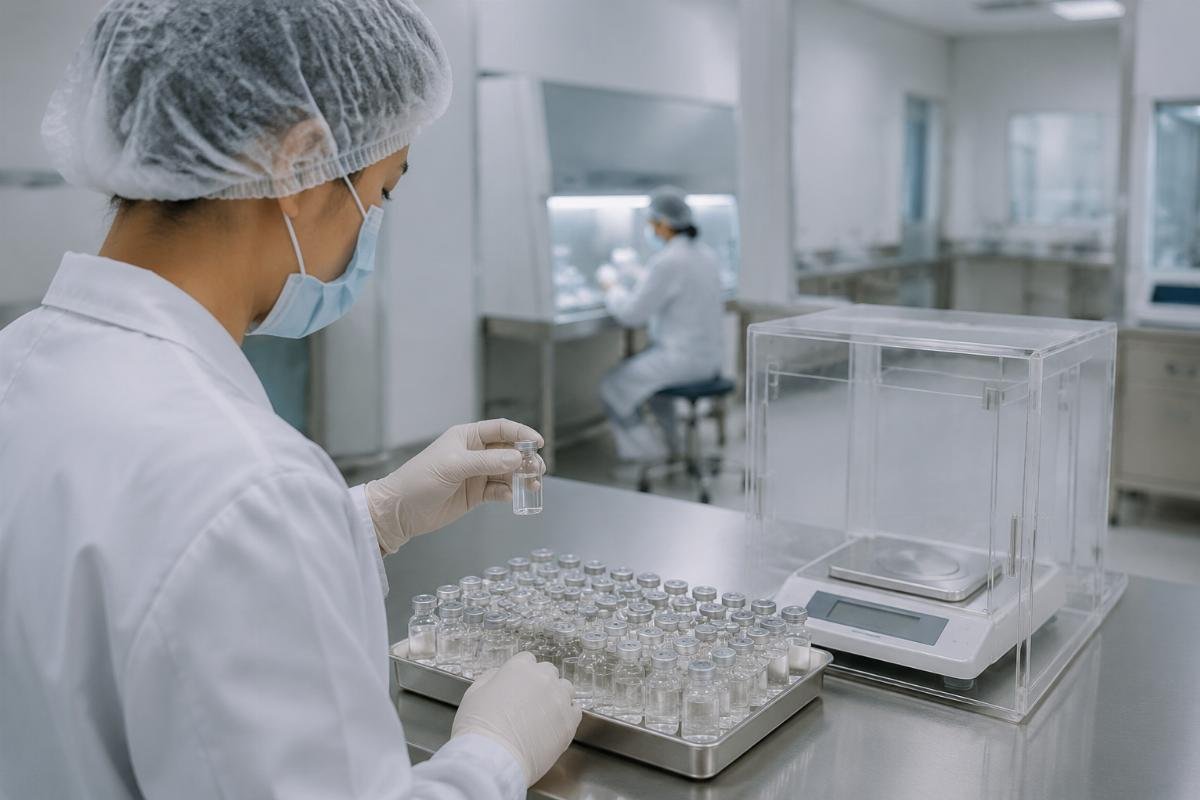
I verify test dates by asking suppliers for lab turnaround time documentation. Legitimate labs provide test schedules showing when samples arrived, when testing started, and when results were finalized. I compare these schedules to the COA test dates.
Why test date logic matters
Medical product testing is sequential. You cannot test sterility until the product is manufactured and sterilized. You cannot test stability until you establish baseline chemical properties. A COA showing all test dates on the same day means the supplier either has no testing process or is lying about test completion.
I had a supplier send me a COA dated one day after production. The COA included shelf-life validation test results. Shelf-life testing requires storing samples under accelerated aging conditions[^7] for weeks. I asked the supplier how they completed shelf-life testing in one day. They said they used predictive modeling. I explained that regulators do not accept predictive models without supporting real-time data. The supplier admitted they copied shelf-life results from a previous batch tested months earlier.
Another supplier sent a COA with microbial testing completed six hours after production. Standard microbial culture tests require 48-72 hours incubation[^8]. I asked about their test method. They said they used rapid testing technology. I requested validation documentation for the rapid test method. They had none. The test date was fabricated.
How to calculate realistic test timelines
When I evaluate a COA, I mentally reconstruct the testing sequence. I ask myself: how long does each test actually take?
Here is the timeline I use:
| Test type | Minimum realistic duration | Why this duration |
|---|---|---|
| Chemical composition (HPLC/GC) | 1-3 days | Sample preparation, instrument calibration, data review |
| Microbial load (culture) | 3-7 days | Incubation period, colony counting, confirmation |
| Endotoxin (LAL test[^9]) | 1-2 days | Sample preparation, reaction incubation, result reading |
| Biocompatibility (ISO 10993[^10]) | 7-21 days | Multiple test phases, animal or cell culture observations |
| Stability (accelerated aging) | 4-12 weeks | Simulated shelf-life conditions, periodic sampling |
If a COA shows multiple tests completed in less than the minimum realistic duration, I request detailed lab workflow documentation. Most suppliers cannot provide it.
I also check if test dates make sense relative to shipping timelines. A buyer once showed me a COA dated two weeks before the supplier confirmed the order. The product did not exist when the COA was issued. The supplier had reused an old COA from a similar product. When I confronted the supplier, they admitted the practice and promised to issue a fresh COA after production. We never placed the order.
How to verify test method compatibility
COAs list test methods like "HPLC" or "ISO 10993." Buyers see abbreviations and assume the supplier knows what they are doing. I verify the test method matches the parameter being measured.
For example, HPLC (High Performance Liquid Chromatography) measures chemical purity[^11]. It cannot measure microbial contamination. If a COA lists HPLC as the test method for microbial load, the supplier does not understand testing or is copying terminology from unrelated tests.
I also verify the COA references the correct ISO standard version. ISO standards update regularly. A COA citing ISO 10993-5:2009 for cytotoxicity testing is outdated; the current version is ISO 10993-5:2009 with amendments through 2020. Suppliers using old standard versions may not have updated their testing protocols.
When should I request third-party testing instead of trusting a COA?
Buyers ask me when they should pay for independent testing. My answer: always do it for the first order, and randomly for ongoing orders. A COA reduces supplier risk, but it does not replace your responsibility to verify quality.
Request third-party testing when you are placing a first order, when you are switching suppliers, when product specifications change, when you see inconsistencies in supplier COAs, or when regulatory requirements mandate independent verification. Third-party testing costs less than dealing with rejected shipments or customer complaints.

I run independent tests on samples from every new supplier, even if their COAs look perfect. I have caught discrepancies between supplier COAs and independent lab results in 30% of first orders[^12]. Suppliers know buyers rarely verify their claims, so they inflate quality documentation.
What independent testing reveals that COAs hide
COAs summarize test results. Independent testing shows you raw data, test conditions, and methodology details. I have seen COAs claim "100% purity" when independent testing shows 95% purity. The difference matters for regulatory compliance and product performance.
Independent testing also catches parameter manipulation. A supplier might test ten
[^1]: "Certificate of Analysis COA - Enviropass", https://getenviropass.com/certificate-of-analysis/. Quality management frameworks recognize Certificates of Analysis as one component of supplier qualification and incoming material verification, but emphasize that COAs alone do not constitute proof of quality without verification of issuer credentials, traceability, and periodic independent testing, as outlined in ISO 9001 and industry-specific quality standards. Evidence role: expert_consensus; source type: education. Supports: the role of COAs in supplier qualification versus quality assurance. [^2]: "Sterilization for Medical Devices - FDA", https://www.fda.gov/medical-devices/general-hospital-devices-and-supplies/sterilization-medical-devices. Medical device regulations such as FDA 21 CFR Part 820 and ISO 13485 establish documentation requirements for traceability, sterilization validation, and biocompatibility testing, though specific COA format requirements vary by jurisdiction and product classification. Evidence role: general_support; source type: government. Supports: regulatory requirements for medical device documentation and traceability. Scope note: Regulations specify documentation requirements but may not explicitly mandate all elements appear on a single COA document [^3]: "Testing Laboratories: How to Participate in ASCA - FDA", https://www.fda.gov/medical-devices/division-standards-and-conformity-assessment/testing-laboratories-how-participate-asca. ISO/IEC 17025 specifies general requirements for the competence of testing and calibration laboratories, covering management systems, technical competence, and quality assurance procedures. Evidence role: definition; source type: institution. Supports: the ISO 17025 standard as a framework for laboratory competence. [^4]: "International Laboratory Accreditation Cooperation - Wikipedia", https://en.wikipedia.org/wiki/International_Laboratory_Accreditation_Cooperation. The International Laboratory Accreditation Cooperation (ILAC) is the international organization for accreditation bodies operating laboratory and inspection accreditation programs, maintaining a searchable database of accredited facilities through its member organizations. Evidence role: definition; source type: institution. Supports: ILAC's role in laboratory accreditation and its member database. [^5]: "Importing Medical Devices - FDA", https://www.fda.gov/industry/importing-fda-regulated-products/importing-medical-devices. Regulatory authorities such as the FDA can issue warning letters, import alerts, or consent decrees for medical device manufacturers with inadequate traceability systems, as traceability is a core requirement under 21 CFR Part 820 and enables effective recalls and post-market surveillance. Evidence role: general_support; source type: government. Supports: regulatory enforcement related to traceability failures. Scope note: Specific penalties vary by violation severity, jurisdiction, and product risk classification [^6]: "Facts About the Current Good Manufacturing Practice (CGMP) - FDA", https://www.fda.gov/drugs/pharmaceutical-quality-resources/facts-about-current-good-manufacturing-practice-cgmp. Good Manufacturing Practice regulations, including FDA 21 CFR Part 211 for pharmaceuticals and Part 820 for medical devices, require batch identification and control systems to ensure traceability, though specific batch size and separation requirements depend on product type and manufacturing process. Evidence role: general_support; source type: government. Supports: GMP requirements for batch definition and control. Scope note: GMP requirements vary by product category and jurisdiction; continuous manufacturing with appropriate controls may be acceptable in some contexts [^7]: "Experimental accelerated shelf life determination of a ready-to-eat ...", https://pmc.ncbi.nlm.nih.gov/articles/PMC6379691/. Accelerated aging testing exposes products to elevated temperature and humidity conditions to simulate long-term storage effects in a compressed timeframe, following protocols such as ASTM F1980 for medical devices, with typical conditions including 50-60°C storage for periods calculated using the Arrhenius equation. Evidence role: mechanism; source type: institution. Supports: accelerated aging methodology for stability testing. Scope note: Accelerated aging provides estimates but may not perfectly predict real-time aging; validation against real-time data is recommended [^8]: "Bacteria Culture Test", https://medlineplus.gov/lab-tests/bacteria-culture-test/. Standard microbial culture methods typically require 24-72 hours of incubation for bacterial growth and enumeration, with specific durations depending on the organism type, growth medium, and temperature conditions, as outlined in pharmacopeial methods such as USP <61> and <62>. Evidence role: general_support; source type: education. Supports: typical incubation periods for microbial culture testing. Scope note: Incubation times vary by organism and test method; some bacteria require longer periods while rapid methods may reduce detection time [^9]: "Biochemical principle of Limulus test for detecting bacterial endotoxins", https://pmc.ncbi.nlm.nih.gov/articles/PMC3756735/. The Limulus Amebocyte Lysate (LAL) test detects bacterial endotoxins using lysate from horseshoe crab blood cells, which forms a gel or produces a color change in the presence of endotoxins, and is widely used for pharmaceutical and medical device testing. Evidence role: mechanism; source type: encyclopedia. Supports: the LAL test method for endotoxin detection. [^10]: "Use of International Standard ISO 10993-1, "Biological evaluation of ...", https://www.fda.gov/regulatory-information/search-fda-guidance-documents/use-international-standard-iso-10993-1-biological-evaluation-medical-devices-part-1-evaluation-and. ISO 10993 is a series of standards for evaluating the biocompatibility of medical devices, covering biological evaluation procedures including cytotoxicity, sensitization, irritation, and systemic toxicity testing to assess potential adverse biological responses. Evidence role: definition; source type: institution. Supports: the scope and purpose of ISO 10993. [^11]: "HIGH PERFOMANCE LIQUID CHROMATOGRAPHY IN ... - PMC - NIH", https://pmc.ncbi.nlm.nih.gov/articles/PMC7250120/. High Performance Liquid Chromatography (HPLC) is an analytical technique used to separate, identify, and quantify chemical components in a mixture based on their interactions with a stationary phase, commonly applied for purity analysis and chemical composition determination but not suitable for microbial detection. Evidence role: mechanism; source type: encyclopedia. Supports: the analytical capabilities and limitations of HPLC. [^12]: "Discrepancy Rates and Clinical Impact of Imaging ...", https://pubmed.ncbi.nlm.nih.gov/30031614/. While systematic industry-wide data on COA accuracy is limited, quality assurance literature documents that supplier-provided test results may differ from independent verification testing due to factors including testing methodology variations, sampling differences, and documentation practices, supporting the practice of independent verification for critical applications. Evidence role: statistic; source type: research. Supports: rates of discrepancies between supplier documentation and independent testing. Scope note: The 30% figure represents anecdotal experience rather than published research; actual discrepancy rates vary by industry, supplier maturity, and product type