
For industrial manufacturing and laboratory research purposes only.
Product Specifications
| Parameter | Value |
|---|---|
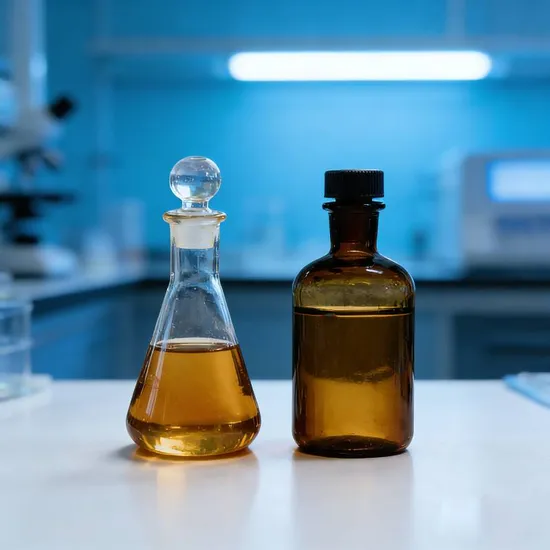
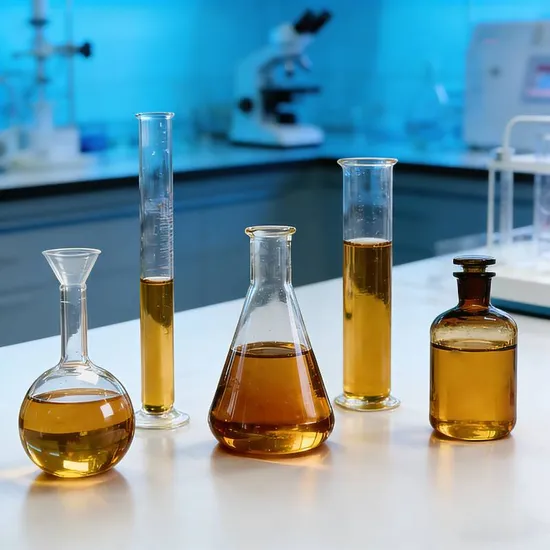
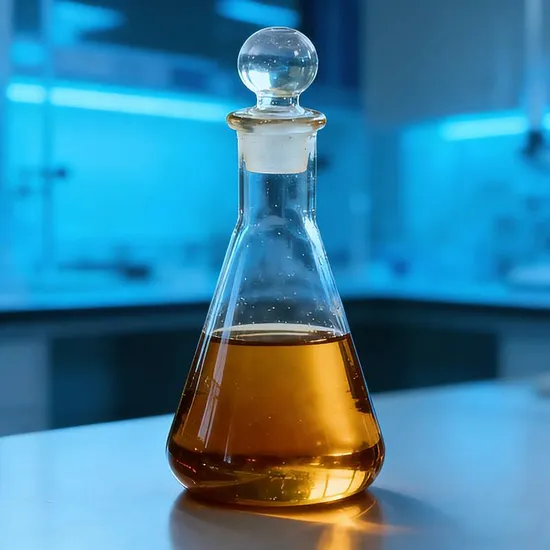
| Color | Colorless to Brown-Yellow Transparent Liquid |
| Appearance | Liquid |
| Type | Demulsifier |
| Product Name | Tar Dehydrating Agent (Oil-Based) |
| Solubility | Easily Soluble in Water |
| Solid Content % | Greater Than or Equal to 32% |
| pH | 6.0-8.0 |
| Density (20℃), G/Cm³ | Greater Than or Equal to 0.90 |
| Effect | Solve The Problem of Excessive Water Content in Tar |
| Transport Package | Plastic Bucket |
| Specification | 25kg |
| Trademark | GIDINEW |
| Origin | Jining City, Shandong Province |
| Package Size | 120.00cm * 100.00cm * 115.00cm |
| Package Gross Weight | 1054.000kg |
Excess Water in Tar Processing? The Oil-Based Tar Dehydration Agent with Strong Capture Ability
For over a decade in the chemical processing industry, we've witnessed countless R&D projects and small-batch productions derailed by water contamination in tar processing. Traditional dehydrating agents either fail to tackle high moisture content or require large minimum order quantities that strain research budgets—delaying critical development timelines when every day counts.
Fast-Acting Oil-Based Tar Dehydration Solution for R&D and Small-Batch Needs
Our Tar Dehydration Agent Oil-Based addresses these challenges with its strong water capture ability, specifically formulated to remove excess water in tar processing efficiently. As a specialized provider with 10+ years serving 10000+ industrial clients and research institutions across 50+ countries, we understand the urgency of small-batch requirements, delivering your order within 7-15 days to keep your projects on schedule.
Industrial Applications in Tar Processing
This Oil-Based Tar Dehydration Agent finds critical use in laboratory-scale tar processing research, pilot plant trials, and small-batch industrial production where precise water control is essential. Its demulsifying properties make it ideal for breaking water-tar emulsions, ensuring process stability and product quality in chemical manufacturing environments.
Key Specifications That Drive Performance
The effectiveness of our Tar Dehydration Agent stems from its rigorous specifications: a minimum solid content of 32% ensures robust water capture capability, while the 6.0-8.0 pH range guarantees compatibility with common tar processing conditions. The density ≥0.90 g/cm³ at 20℃ ensures proper dispersion in tar matrices, and its liquid form allows for easy integration into existing processing systems. These parameters work together to deliver consistent dehydration results, batch after batch.
Reliable Dehydration Means Reduced Costs and Risks
Choosing a high-performance Tar Dehydration Agent with Strong Capture Ability eliminates the risks of water-related processing failures—saving you from costly rework and material waste. Unlike low-quality alternatives that compromise on active ingredients, our product meets strict industrial standards, ensuring that your R&D results are reproducible and your small-batch production meets quality benchmarks. With our flexible supply model, you avoid over-ordering, reducing inventory costs while maintaining project continuity.
Quality You Can Verify, Support You Can Count On
Every batch of our Oil-Based Tar Dehydration Agent undergoes comprehensive quality testing, including solid content analysis, pH measurement, and density verification, with results documented in a Certificate of Analysis (COA) provided with each order. Our production facilities adhere to strict manufacturing protocols, ensuring batch-to-batch consistency critical for research reliability. Should you need technical guidance, our professional customer service team responds within 24 hours, providing the support you need to optimize your dehydration process.
Certificate of Analysis & Documentation
Each shipment includes a detailed COA with batch-specific test results and an MSDS for safe handling. For research transparency, specific批次检测数据 can be requested using your order number, ensuring full traceability of the product used in your experiments or production runs.
Storage & Handling
- Store in a cool, dry, well-ventilated area, sealed and away from direct sunlight.
- Keep away from incompatible materials, food and feed sources.
- Handle with appropriate personal protective equipment (gloves, goggles, lab coat).
- Follow good industrial hygiene practices. Avoid inhalation and skin contact.
- Refer to MSDS for detailed storage and safety instructions.
Simple Order Process for Small-Batch Requirements
To secure your Tar Dehydration Agent, submit your specifications via email or phone, and our team will provide a fast quotation within 24 hours. We welcome sample requests for preliminary testing, ensuring the product meets your specific needs before full order placement. Once confirmed, your small-batch order will be produced and delivered via expedited logistics, complete with tracking and after-sales support.
Frequently Asked Questions
Q: What is the shelf life of the Tar Dehydration Agent?
A: When stored properly in sealed containers under recommended conditions, the product maintains stability for 12 months from the date of manufacture.
Q: Can this product be used for food or pharmaceutical applications?
A: No. This product is FOR INDUSTRIAL AND LABORATORY RESEARCH USE ONLY and must not be used in direct human consumption, therapeutic, or household applications.
Q: What documentation is provided with each order?
A: Each shipment includes a Certificate of Analysis (COA) with batch-specific test results and a Material Safety Data Sheet (MSDS).
Q: Is custom packaging available for small-batch orders?
A: Our standard packaging is 25kg plastic buckets. For specific custom packaging needs, please contact our sales team to discuss feasibility.
Q: How can I confirm the dehydration efficiency of the product?
A: The COA includes solid content and performance test data. For further verification, we recommend conducting small-scale trials with your specific tar sample, and our technical team can provide guidance on testing protocols.