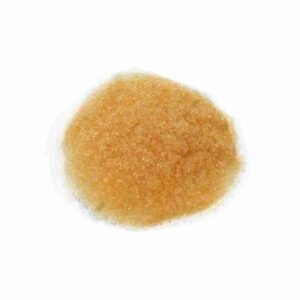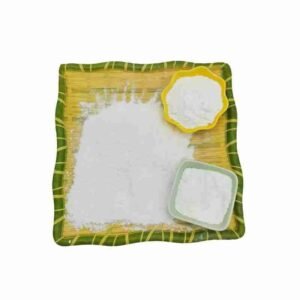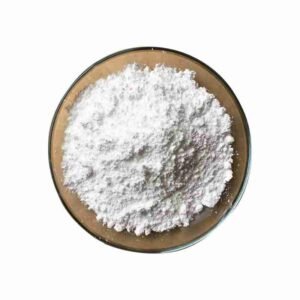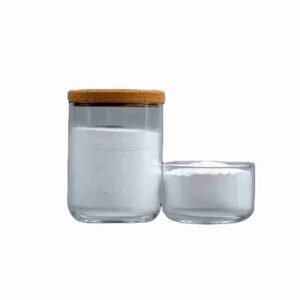
Silicon dioxide CAS#7631-86-9

Silicon dioxide CAS#7631-86-9

Silicon dioxide, commonly known as silica, is a naturally occurring compound found in quartz and sand. It is a primary component of most rocks and is widely used in various industries due to its high thermal stability, chemical inertness, and optical clarity. In chemical applications, it is valued for its abrasive, refractory, and adsorptive properties, making it essential in products like glass, ceramics, and electronics.

Quality Certified
Technical Support
Custom R&D

Product Details

Silicon dioxide, commonly known as silica, is a naturally occurring compound found in quartz and sand. It is a primary component of most rocks and is widely used in various industries due to its high thermal stability, chemical inertness, and optical clarity. In chemical applications, it is valued for its abrasive, refractory, and adsorptive properties, making it essential in products like glass, ceramics, and electronics.

Category:

Description

Silicon dioxide CAS#7631-86-9

Silicon dioxide Chemical Properties
Melting point >1600???C(lit.)
Boiling point >100???C(lit.)
density 2.2-2.6?g/mL?at 25???C
vapor pressure 13.3hPa at 1732??
refractive index 1.46
Fp 2230??C
storage temp. 2-8??C
solubility Practically insoluble in water and in mineral acids except hydrofluoric acid. It dissolves in hot solutions of alkali hydroxides.
form suspension
pka 6.65-9.8[at 20 ??]
Specific Gravity 2.2
color White to yellow
PH 5-8 (100g/l, H2O, 20??)(slurry)
Odor at 100.00?%. odorless
Resistivity 1??10*20 (??/?ฬฆ?.cm)
Water Solubility insoluble
Hydrolytic Sensitivity 6: forms irreversible hydrate
Sensitive Hygroscopic
Crystal Structure Trigonal
Merck 14,8493
Exposure limits NIOSH: IDLH 3000 mg/m3; TWA 6 mg/m3
Stability: Stable.
CAS DataBase Reference 7631-86-9(CAS DataBase Reference)
NIST Chemistry Reference Silicon(iv) oxide(7631-86-9)
IARC 3 (Vol. Sup 7, 68) 1997
EPA Substance Registry System Silica (7631-86-9)
Safety Information
Hazard Codes Xn,Xi
Risk Statements 36/37/38-36/37-22-43-52/53-36/38
Safety Statements 26-37/39-36-36/37/39-36/37-61
OEB B
OEL TWA: 6 mg/m3
HS Code 2811221000
Toxicity LC inhalation in rat: > 200gm/m3/1H
IDLA 3,000 mg/m3
Industry Solutions

Designed for Modern Chemical Industry

Meeting the demands of dual-carbon goals with green, efficient new material solutions.

โš—๏ธ

New Catalysts

High-performance catalysts for energy-efficient chemical processes

๐ŸŒฑ

Eco-friendly Materials

Bio-based and biodegradable materials for sustainable manufacturing

๐Ÿ”ฉ

Special Polymers

High-performance polymers for demanding industrial applications

๐Ÿค

Custom R&D

Collaborative development from concept to commercial production

Our Cooperation Process

From your initial inquiry to long-term technical partnership -- a transparent, efficient workflow.

๐Ÿ“‹
01 Submit Requirement
๐Ÿ”
02 Technical Evaluation
๐Ÿงช
03 Sample Testing
โš™๏ธ
04 Formula Optimization
๐Ÿญ
05 Trial Production
๐Ÿš€
06 Mass Delivery & Support

Request a Quote

Tell us your requirements and our technical team will respond within 24 hours.

By submitting, you agree to our privacy policy.

Related Products

Chemical Minerals

Bentonite, sodian CAS#85049-30-5

Bentonite, sodium-activated, is a type of clay rich in montmorillonite minerals, which undergoes a process to increase its sodium content. This alteration enhances its swelling and adsorptive properties, making it a highly effective thickener and gel-forming agent. Sodium bentonite is widely used in drilling muds, foundry sands, and as a binder in various industrial applications. Its ability to absorb liquids and form stable gels makes it invaluable in cosmetics, agriculture, and as a component in the manufacturing of ceramics and paper products.

View Details
Daily Chemicals

Coconut oil monoethanolamide CAS#68140-00-1

Coconut Oil Monoethanolamide is a high-performance emulsifier derived from natural coconut oil. It is a key component in personal care and cosmetic formulations, providing excellent emulsifying properties and improving product texture. With its natural origin and superior performance, it is the preferred choice for creating stable and high-quality products.

View Details
Daily Chemicals

Hydrogenated Lecithin CAS #92128-87-5

Hydrogenated lecithin is light yellow or milky white powder. Due to the use of catalysis and hydrogenation processes, the unsaturated chains of unsaturated fatty acids in the molecular structure of soybean lecithin disappear, thereby greatly improving the chemical stability, dispersibility, and emulsification of lecithin. It has decolorization and deodorization effects, which is more conducive to storage and preservation, and improves its role in medicine, high-end cosmetics, and light industry. It is especially suitable for intravenous fat emulsifiers and nutrients. It is used as a blood lipid emulsifier to prevent arteriosclerosis, and has the advantages of being easy to digest, easy to absorb, and almost not remaining in the internal organs.

View Details