

For industrial manufacturing and laboratory research purposes only.
Product Specifications
| Parameter | Value |
|---|---|
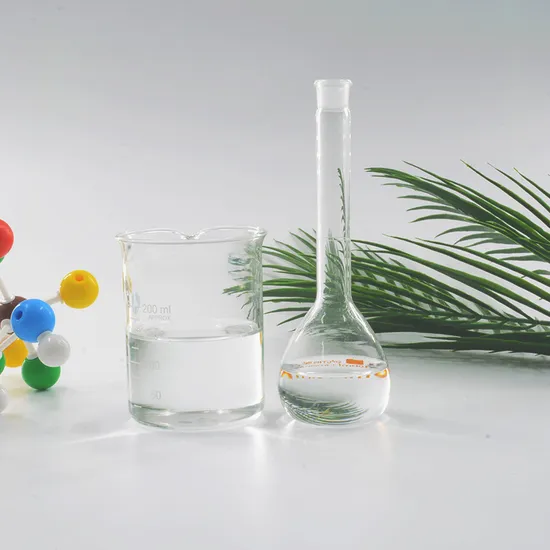
| Color | Colorless to Light Yellow Transparent Liquid |
| Appearance | Liquid |
| Type | Demulsifier |
| Product Name | Resin Polymer Liquid Demulsifier |
| pH | 5.0-8.0 |
| Density (20℃), G/Cm³ | Greater Than or Equal to 0.90 |
| Effect | Solve The Problem of High Moisture Content in Tar |
| Transport Package | Plastic Bucket |
| Specification | 25kg |
| Trademark | GIDINEW |
| Origin | Jining City, Shandong Province |
| Package Size | 120.00cm * 100.00cm * 115.00cm |
| Package Gross Weight | 1054.000kg |
Overcoming Tar Dehydration Challenges with SGR 1710W Demulsifier
In industrial processes, excessive moisture in tar creates significant operational hurdles—from increased energy consumption during distillation to compromised product quality and equipment corrosion. Our team has witnessed countless production delays caused by traditional demulsifiers failing to meet dehydration efficiency requirements, especially in small-batch trials where timely results are critical for R&D validation.
Targeted Solution for Tar Dehydration
The Industrial Treatment Resin Polymer Liquid Demulsifier SGR 1710W addresses these challenges head-on. As a specialized tar demulsifier, it efficiently breaks water-in-tar emulsions, reducing moisture content to optimal levels for downstream processing. With our 24-hour response system and 7-15 day small-batch delivery, we ensure research laboratories and pilot plants can maintain uninterrupted workflows without the constraints of large minimum order quantities.
Industrial Applications & Advantages
This liquid demulsifier finds critical use in coal chemical plants, coking facilities, and tar processing units where efficient phase separation is essential. Its resin polymer formulation delivers consistent performance across varying tar compositions, making it ideal for both routine production and experimental processes. Unlike generic demulsifiers, SGR 1710W is engineered specifically for tar dehydration, minimizing chemical usage while maximizing water removal efficiency.
Key Specifications for Reliable Performance
The technical parameters of SGR 1710W directly impact its field performance. The 5.0-8.0 pH range ensures compatibility with common tar processing systems without causing pH imbalance. A density ≥0.90 g/cm³ at 20℃ guarantees proper dispersion in tar matrices, while the colorless to light yellow transparent liquid form allows for easy visual inspection of dosage and mixing. These attributes collectively ensure predictable, repeatable dehydration results—critical for scaling from laboratory trials to industrial production.
Quality Assurance & Regulatory Compliance
Choosing SGR 1710W means prioritizing process reliability over short-term cost savings. Inferior demulsifiers often lead to incomplete dehydration, requiring reprocessing and increasing operational costs. Our product adheres to strict quality control standards, with each batch tested for performance consistency. As a trusted supplier with 10+ years of experience serving 50+ countries, we understand the importance of regulatory compliance—all materials meet industrial-grade specifications for safe handling and environmental compatibility.
Our Commitment to Quality
Every batch of SGR 1710W undergoes rigorous testing to ensure it meets the stated specifications. We employ advanced analytical methods to verify performance characteristics, and each delivery includes a detailed Certificate of Analysis. Our flexible production system allows for both standard and customized formulations, while our dedicated technical support team provides guidance on optimal dosage and application methods. If a batch fails to meet your requirements, we offer a no-questions-asked replacement policy.
Certificate of Analysis & Documentation
All orders include a batch-specific Certificate of Analysis (COA) detailing test results for key parameters such as pH, density, and appearance. Material Safety Data Sheets (MSDS) are provided to ensure proper handling and storage. For research institutions requiring detailed performance data, additional testing reports can be requested prior to order confirmation.
Storage & Handling
- Store in a cool, dry, well-ventilated area, sealed and away from direct sunlight.
- Keep away from incompatible materials, food and feed sources.
- Handle with appropriate personal protective equipment (gloves, goggles, lab coat).
- Follow good industrial hygiene practices. Avoid inhalation and skin contact.
- Refer to MSDS for detailed storage and safety instructions.
Streamlined Order Process
Initiate your order by submitting a request through our contact channels, specifying your required quantity and any special documentation needs. We provide a detailed quotation within 24 hours, including delivery timelines and batch availability. For first-time users, sample quantities are available for performance evaluation before full-scale procurement, ensuring the product meets your specific process requirements.
Frequently Asked Questions
Q: What is the shelf life of SGR 1710W?
A: When stored in original sealed containers under recommended conditions, the product has a shelf life of 12 months from the date of manufacture.
Q: Is this demulsifier suitable for food or pharmaceutical applications?
A: No. SGR 1710W is for industrial and laboratory research use only, and must not be used in applications involving direct human consumption or therapeutic use.
Q: What documentation is provided with each order?
A: Each delivery includes a Certificate of Analysis (COA) and Material Safety Data Sheet (MSDS). Additional technical documents can be requested upon order placement.
Q: Can the packaging size be customized?
A: Yes, we offer flexible packaging options for bulk orders. Contact our sales team to discuss specific packaging requirements.
Q: How is the effectiveness of the demulsifier determined?
A: Performance is evaluated through standard bottle test methods, measuring water separation efficiency and emulsion breaking time. Customized testing protocols can be arranged for specific tar samples.