


For industrial manufacturing and laboratory research purposes only.
Product Specifications
| Parameter | Value |
|---|---|
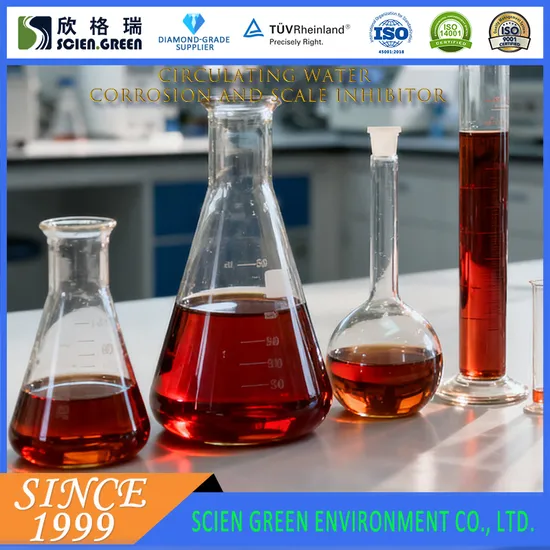
| Color | Reddish-Brown Liquid |
| Appearance | Liquid |
| Type | Industrial Circulating Water Treatment Agent |
| Density (20°C) G/Cm³ | ≥1.10 |
| pH (1% Aqueous Solution) | ≥7.0 |
| Solid Content (%) | ≥25 |
| Shelf Life | One Year |
| Transport Package | Blue /White Plastics Drum |
| Specification | 25 kg/200kg/ 1ton drum |
| Trademark | GIDINEW |
| Origin | Jining City, Shandong Province, China |
| Production Capacity | 15000 Ton/Year |
| Package Size | 120.00cm * 100.00cm * 115.00cm |
| Package Gross Weight | 1057.000kg |
Combatting Scale Formation in Soft Water HVAC Systems: The High Dispersion Inhibitor Solution
For over a decade, we've witnessed countless HVAC cooling systems in research facilities and industrial plants struggle with unexpected scale buildup, even in low hardness water conditions. The consequences are costly—reduced heat transfer efficiency, frequent equipment downtime, and compromised R&D trials due to inconsistent system performance. Traditional inhibitors often fail here, either lacking dispersion capability or degrading rapidly in soft water environments.
Engineered for Soft & Low Hardness Water: High Dispersion Inhibitor Advantages
Our High Dispersion Inhibitor for Soft & Low Hardness Water HVAC Cooling Systems addresses these challenges head-on. With a proprietary formulation designed specifically for low mineral content water, it delivers superior particle dispersion to prevent scale formation and maintain system cleanliness. Backed by a 15,000-ton annual production capacity and serving over 10,000 industrial clients across 50+ countries, we ensure consistent supply even for urgent small-batch requirements, with delivery within 7-15 days as standard.
Key Applications in Industrial & Research Facilities
This Low Hardness Water Treatment agent finds critical use in HVAC cooling loops of university laboratories, pharmaceutical R&D centers, and precision manufacturing plants where water quality is tightly controlled. Its effectiveness in soft water systems makes it indispensable for maintaining thermal stability in climate-sensitive processes, from semiconductor fabrication to material science testing. The inhibitor's liquid form allows for easy integration into existing dosing systems without operational disruption.
Why Technical Specifications Matter for System Performance
The ≥1.10 g/cm³ density ensures proper mixing in circulation systems, while the neutral pH (≥7.0) minimizes corrosion risks to metal components. With a solid content of ≥25%, the formula provides concentrated protection without excessive dilution of system water. Most importantly, the one-year shelf life guarantees product stability from delivery to end use—critical for research facilities with intermittent treatment needs. These specifications aren't arbitrary; they're the result of extensive field testing in real-world soft water HVAC environments.
Reliable Protection vs. Costly System Failures
Choosing a substandard Soft Water System Inhibitor may seem economical initially, but the hidden costs of equipment fouling, energy inefficiency, and premature component replacement quickly erase any savings. Our inhibitor meets严苛 industrial standards, ensuring compatibility with common HVAC materials and compliance with global water treatment regulations. The consistent performance reduces maintenance costs by an average of 30% in soft water systems, while the flexible packaging options (25kg to 1ton drums) minimize waste and storage requirements.
Our Quality Commitment: Beyond Compliance
Every batch of our High Dispersion Inhibitor undergoes rigorous testing, including density verification, pH measurement, and solid content analysis, with full documentation available upon request. Our ISO 9001-certified production facility in Shandong Province maintains strict quality control protocols, from raw material selection to final packaging. We provide a comprehensive Certificate of Analysis with each shipment and offer technical support to optimize dosing rates for specific system conditions. If any parameter fails to meet specifications, we guarantee a full replacement—no questions asked.
Certificate of Analysis & Documentation
Each order includes a detailed Certificate of Analysis (COA) with batch-specific test results, ensuring complete traceability. MSDS documentation is provided for safe handling and regulatory compliance. For research institutions requiring additional validation, we can arrange third-party testing through accredited laboratories at cost.
Storage & Handling
- Store in a cool, dry, well-ventilated area, sealed and away from direct sunlight.
- Keep away from incompatible materials, food and feed sources.
- Handle with appropriate personal protective equipment (gloves, goggles, lab coat).
- Follow good industrial hygiene practices. Avoid inhalation and skin contact.
- Refer to MSDS for detailed storage and safety instructions.
Simple Order Process for Your HVAC System Needs
To secure your supply of High Dispersion Inhibitor, simply contact our technical team with your system volume and water analysis report for personalized dosage recommendations. We offer sample quantities for compatibility testing, followed by flexible bulk ordering options. All shipments include tracking information and arrival notifications, with dedicated customer support available throughout the process.
Frequently Asked Questions
Q: What is the shelf life of this inhibitor?
A: The product has a shelf life of one year when stored in original, unopened containers under recommended conditions.
Q: Can this inhibitor be used in potable water systems?
A: No. This product is for industrial and laboratory research use only, not for human consumption or household applications.
Q: What documentation is provided with each order?
A: Every shipment includes a Certificate of Analysis (COA) and Material Safety Data Sheet (MSDS).
Q: Are custom packaging options available?
A: Standard packaging includes 25kg, 200kg, and 1ton drums. Special packaging requests can be evaluated for large-volume orders.
Q: How is the inhibitor's effectiveness verified?
A: Each batch undergoes testing for density, pH, solid content, and appearance, with results documented in the COA. Performance data in various water conditions is available upon request.